
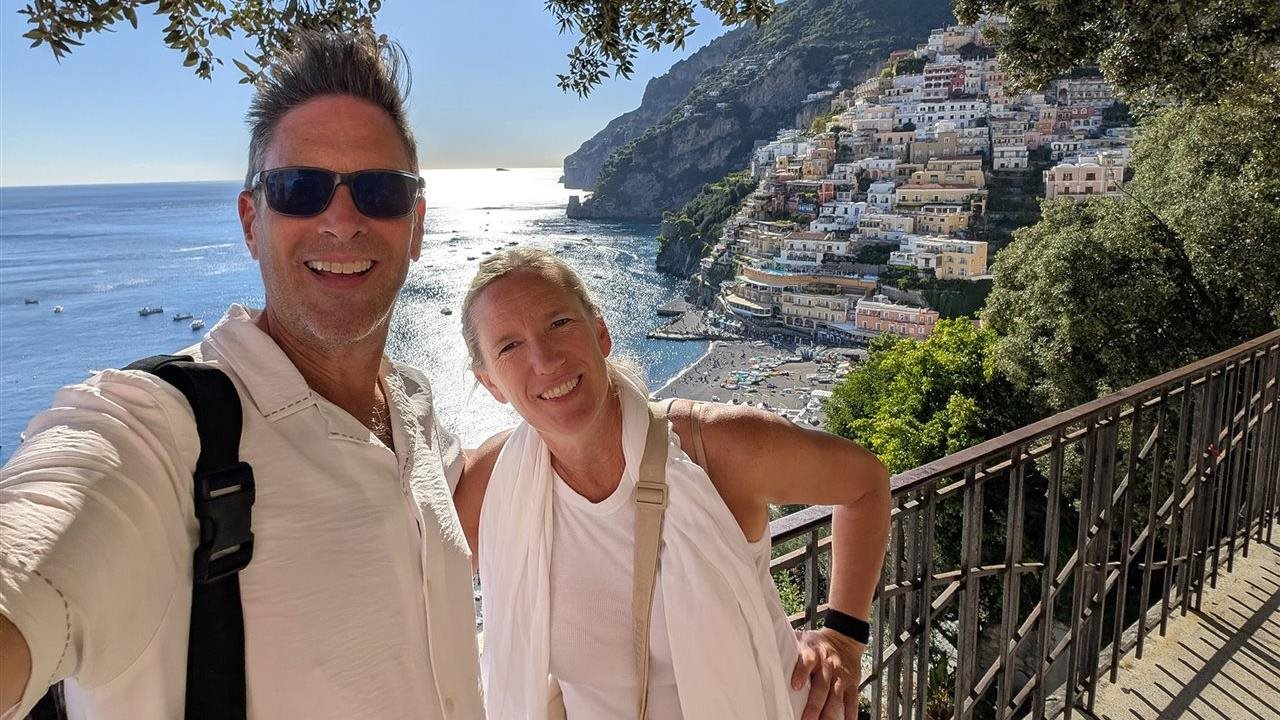
(BPT) - Erik Lofstrand never expected a routine physical to change his life. But when he was diagnosed with Type 2 diabetes, Erik suddenly found himself navigating a life-changing condition.
"I went through all stages of grief," Erik said. "At first, I was in denial. I thought if I exercised more and ate healthier, it would just go away."
Although he made healthy lifestyle changes, managing his glucose still felt like guesswork. Traditional fingersticks offered only snapshots of information, leaving him without a clear understanding of how his daily decisions impacted his glucose levels.
"I didn't want to guess — I wanted information I could actually use," Erik said.
Erik grew frustrated that diet and exercise alone weren't giving him the answers he needed. As someone who embraces technology in all aspects of his life and work, he began researching additional tools and learned about continuous glucose monitors (CGMs).
As he explored his options, Erik realized he would need a prescription and a conversation with his doctor to determine whether a CGM was right for him. Armed with what he learned, he was able to have an informed and specific conversation with his doctor, about his goals and diabetes management. Together, they decided Abbott's FreeStyle Libre 3 Plus sensor was a good fit, enabling him to follow his glucose levels in real time and gain insight into how his food intake, activity and daily habits affected his glucose levels.
By taking the initiative to ask about CGM technology, Erik was able to play an active role in his care and have an informed, collaborative conversation with his doctor. His experience reflects a common barrier: research shows that one in five people living with diabetes feel they need their doctor to suggest or recommend new tools, rather than feeling empowered to ask about those options themselves1.
What is a CGM?
A continuous glucose monitor (CGM), like Abbott's FreeStyle Libre 3 Plus sensor, is a small, discreet sensor worn on the back of your upper arm that continuously measures your glucose levels every minute, day and night2. It sends glucose readings directly to a compatible smartphone app3 or reader4, providing real-time information and trends.
Rather than relying on a single glucose reading obtained from prior methods like fingersticks, a CGM provides a complete picture of how meals, activity and medication affect glucose levels over time.
Why switch to a CGM?
For Erik, seeing those trends, not just individual numbers, gave him the insights he needed to make changes in his daily routine that made an impact.
"Having access to this data is empowering. It allows me to manage my diabetes proactively and avoid challenges that could set my whole day off course," said Erik. "My CGM is a huge reason why I feel more confident and in control of my health."
Research continues to demonstrate the benefits of CGM technology. In a recent study, people with Type 2 diabetes using a CGM lowered their HbA1c, a key marker of blood sugar levels, by 0.6% more than those using traditional fingersticks and spent about 2.5 additional hours each day in a healthy glucose range6.
Like Erik, many people with diabetes find that having continuous glucose information can provide a clearer understanding of how food, activity and other daily habits affect their glucose levels, helping them make more informed decisions5.
How to talk to your doctor about CGM
If you or someone you love is living with Type 2 diabetes, consider talking to a doctor about options and whether a CGM is technology to consider. Not sure how to start the conversation? Check out these helpful tips:
For Erik, taking that first step to ask his doctor about a CGM changed the way he lives with diabetes.

"Talking to my doctor about a CGM was one of the best decisions I made after my diagnosis," Erik said. "I'm healthier now than I've ever been. You can't manage what you can't measure — data is power. The more you understand your diabetes, the more you can take charge of your life."
To learn more about CGMs and Abbott's Libre systems, click here.
The views expressed should not be used for medical diagnosis or treatment or as a substitute for professional medical advice. Individual symptoms, situations and circumstances may vary.
For U.S. residents - Important Safety Information Product for prescription only, for Important Safety Information please visit FreeStyleLibre.us.
ADC-2697391 v1.0


